
Storyteller journey with AI, Clay scaling their GTM engineers team, AI Design Night
interview of builders, behind-the-scenes, AI use case of the week, meet us IRL

🪄 Hey there, welcome to the fourth issue of ‘Another one bites on Dust’, where we share what’s happening in and around Dust and some insider takes for AI builders, tinkerers and enthusiasts.
AI is fundamentally transforming both our personal and work lives, altering the way we act, the way we think, and the way we collaborate. This profound change requires new environments. We're building Dust to serve as the operating system for AI-driven companies. When we're done, work won't be the same.
We hope this email helps at least a bit to understand what to do/how to use AI in your lives, and if there’s more that we could/should be doing, feel free to leave a comment, we read them all.

Long live the builders: Sarah McBride
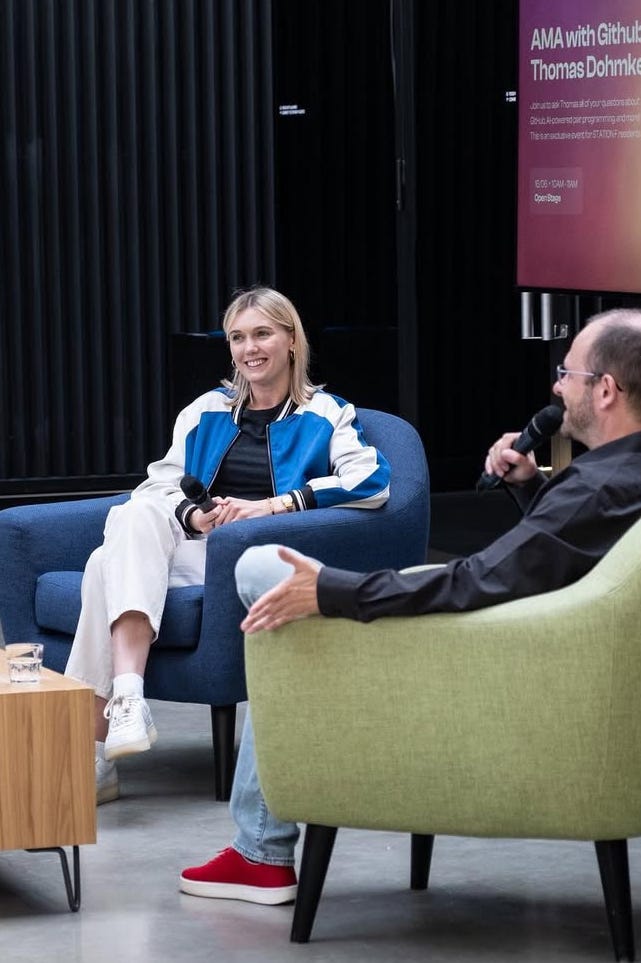
Hey Sarah, can you introduce yourself?
I’m Sarah and I’m originally from a small town in Northern Ireland. I’ve spent time living in London and New York, but for the past five years, Paris has been home. I got my start in social media marketing back in high school, running Twitter and Instagram accounts for startups in Belfast. That experience laid the perfect foundation for what I do today at amo: a mix of brand, product, and community-driven growth. Outside of amo, I’m an avid runner and a proud member of Harbat Running Lab.
What amo is doing exactly?
At amo, we’re building a collection of apps that actually bring you closer to your friends. I emphasize actually because this was the original promise of all the big social platforms today, but instead of bringing us closer to our friends, they turned us into isolated doom scrollers. amo was started by core members of the former Zenly team (map app acquired by Snapchat, one of France’s biggest consumer tech exits) and I joined when they were still in stealth. We’re taking a suite approach because we believe the best apps offer a singular, focused user experience. This gives users the choice over which canvas or format they want to use with friends, while allowing us to create a better user experience for them by not stuffing each app full of features that are all fighting for attention. Since launching officially in 2023, we’ve iterated on the original apps and had a ton of success with our map-based app, Bump — with more new stuff coming very soon 😉
When did you start using AI in your life? What were your very first experiments?
I’m very fortunate to have had a front row seat to the first wave of real-world applications of generative AI, back in 2019. At the time I was working at Betaworks in NYC and the investment team there spotted the increasing pace of research and development around GANs and put out a call out for startups building with that emergent technology. I worked on their early-stage accelerator program focused on this topic, giving me exposure to 6 teams working with generative AI. This was the GPT-2 era, so the tech was still very early, but I was totally blown away by what was possible. Even though it was pre-ChatGPT, we were able to use the tech at the time to write the launch blog post to announce the new accelerator program and people had no idea it was written by AI.
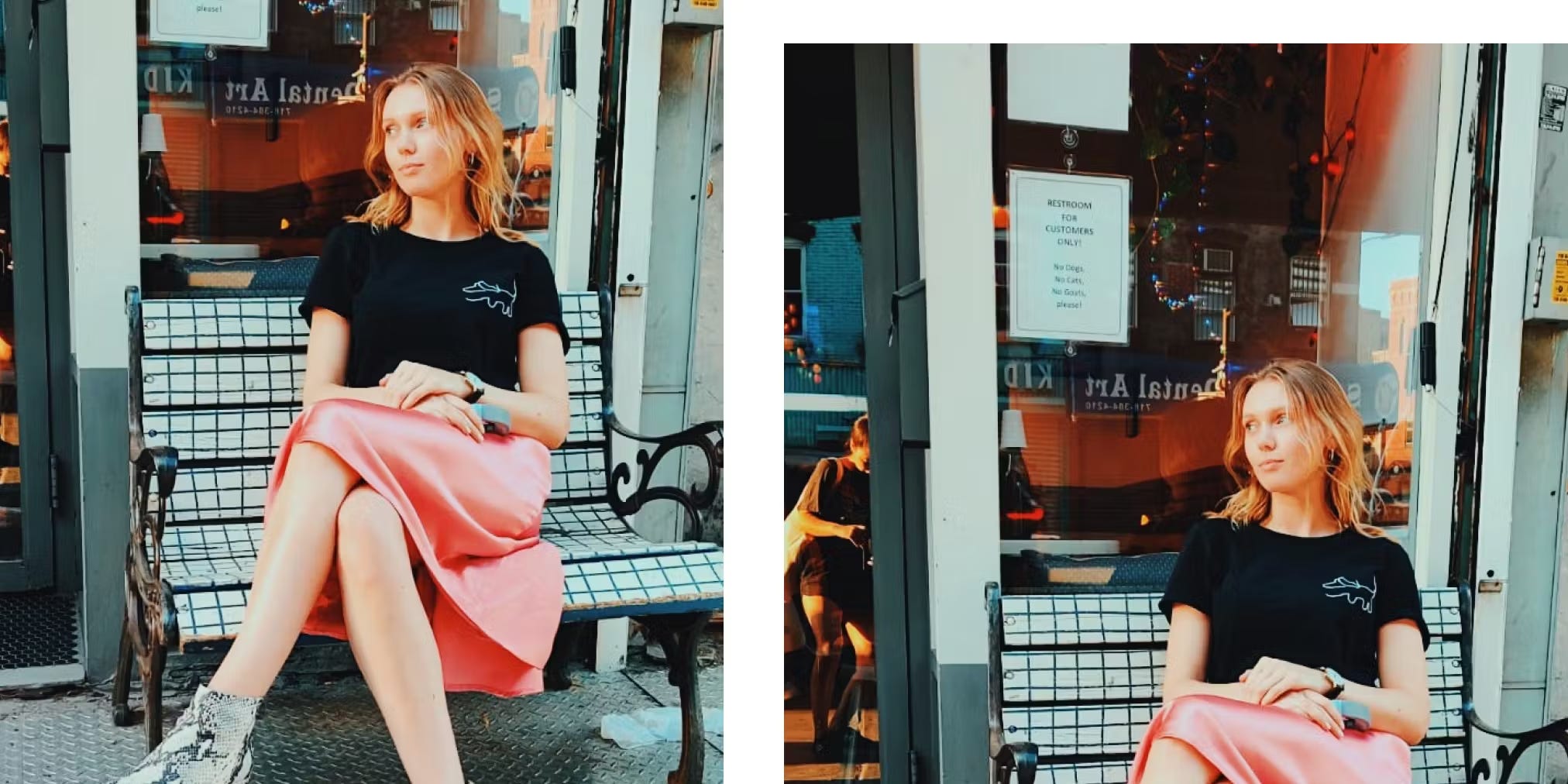
But my first real experiment with AI was with 2 friends when we launched an AI-generated t-shirt brand. We used an open source data set from Google’s Doodle project which gave us over 1 million hand-drawn images of everyday objects, then got the AI to spit out its own drawing of symbols of daily New York life: a rat, pizza slice, pigeon. We launched on Product Hunt, it went a bit viral, got covered by WIRED, then started getting a stream of orders with Sand Hill shipping addresses. We were just having fun with it but genuinely had some VCs reaching out to talk because they were exploring AI applications for the fashion industry (!)
When did you start implementing AI in your work?
It’s funny because despite this early experience, I then became suuuper skeptical about using AI in my direct work. At the core of my skillset is storytelling - finding the right words, images, in-app activations, etc that provoke emotion in the person sitting on the other side of the screen. I just didn’t trust that AI could do this in a unique way that would truly understand human emotion, or do so with taste. So I was very late to experimenting with the more recent advancements in GPTs and became pretty defensive when people suggested I try it for copywriting.
Fast forward to today and I’m on better terms with AI. The breakthrough came from having no other choice but to embrace it. Bump was going through a huge growth spike and our community inbound skyrocketed overnight. I was the only person responsible for it and despite putting all my other work on hold, I just didn’t have enough hours in the day to read every single inbound message and craft a human and helpful response to it. Plus, much of the inbound was coming from folks in non-English speaking countries so I was losing a lot of time on translations.
So I used Dust to create an agent (lovingly named Sylvie and with a sylvanian doll profile picture), trained her on the FAQ doc I was referencing myself, iterated a few times on the tone of voice and style guide part of the prompt, and then used Zapier to set up a workflow to integrate Sylvie into our community tool. I think it took 3 days in total to set up and refine and all of a sudden I was able to scale myself short term to meet the community’s needs, and free up my time to refocus on my other work. What’s also key here is that she didn’t fully take over replying for me, but instead pre-translated the user’s message and drafted a suggested response. I was still involved in the process by reviewing her responses and sometimes adapting them, before sending to the user. But I could do this much, much faster.
How would you describe your relationship to AI (both professionally and personally) today? Can you share your most frequent use cases?
Since my breakthrough, I now see AI as a sidekick that can scale me up - like hiring a really good chief of staff. I’m always on the look out for ways to automate and improve my professional workflows with the help of AI. In my personal life, the applications are much more simple: creating pacing charts for running or proofreading my text messages in French that I need to send in my running group chat (lol).
And the one that blew your mind the most?
I wish I had a super creative, WTF example here but my response is actually quite boring: it’s the experience I had with Dust creating the Sylvie support agent. What blew my mind is that it *just worked* and because at that moment I finally accepted that I could integrate AI into my workflow in a way that genuinely saved me time or could scale up what I was doing.
How do you see your work changing?
On the creative side, AI is going to help generate creatives much more quickly. We’re already using AI to generate some of the brand content on the Bump IG account and haven’t seen any negative impact on engagement rate. Anyone who’s working with designers will need to be versed in prompt engineering and be comfortable using generative tools in order to provide a visual baseline in creative briefs. But I also think we’re about to enter a really interesting new era of artistic direction and I can’t wait to see the new iconic ads and campaigns that will emerge with the help of AI as a partner to creatives.
On the project management side, I can see myself using AI to synthesize all of the needs and updates from everyone involved to provide a centralized overview of progress. I’d love AI to reduce the communication and “busy work” time that’s usually required to just get a snapshot of where everyone is at, freeing me up to plan what’s next.
What would you advise a 'young Sarah' starting to explore storytelling and marketing today?
Well to use AI as a metaphor here, I’d start by saying to maximize your training data. Which means simply immersing yourself in all kinds of storytelling and marketing content - everything from newsletters and podcasts by people in the industry, to getting inspiration from cinema, literature, and real life experiences. To start by being a sponge to everything around you.
Then, develop taste. Especially in an age of AI, where everyone has access to the same models and are rushing to outsource the creative part to an AI, I believe taste will become the differentiator and the protector against producing and accepting “slop”.
summed this one up perfectly during the AI Studio Ghibli viral moment on Twitter back in March.And then start producing. I secured my first string of jobs in this industry thanks to my personal Twitter and Instagram accounts - they became a portfolio of sorts. And if I was starting all over again today, I’d be integrating AI into my workflow as early as possible.
Last but not least, where would you love to see AI evolve in the future?
I’m excited to see it continue to be integrated into everyday professional and personal tools. I wouldn’t say that I have any big expectations or asks for the core models themselves as it’s already astonishing to see what they can do. But on the product side of things, I’m excited to start playing with Browser Company’s latest product, Dia, to see how it can make the 10+ hours a day I spend in my browser window more efficient (and, because it’s Browser Co, joyful!)
But if I could have a magic wand and see AI solve one area right away, it would be to better centralize and synthesize all my personal health data — and use it to both spot emerging health issues and coach me to become a better athlete. I wear a Whoop band 24/7 that tracks my heart rate/workouts/sleep, etc. I have a Garmin for tracking my training. And I get a Neko health full body scan once a year. That’s a lot of data! But today I can’t see it all in one place, and the UX of screenshotting various pieces and asking ChatGPT for insights is far from ideal.
I do have a last one actually, I've shared your Paris guide countless times (and I can tell people love it): why did you make it? How do you keep it up-to-date? Which agents could help you with this? (connected to your Bump's profile for instance haha 🤷♂️)
I was fed up with seeing Paris slander on Twitter from folks visiting for a weekend and going to tourist traps and having a bad experience. Plus I love curating and writing about really good experiences in cafés and restaurants. So that’s where it started! Unfortunately I haven’t had the time to keep it updated so maybe that will be my summer side project - to see how I can embrace AI! As for the idea to connect it to my profile on Bump, we literally just shipped Places, so you can already go to my profile and see all the spots I’ve saved to my map and where I hangout the most :)
This is awesome, thank you Sarah!
Behind-the-Dust
🤖 Direct news and links about Dust from people inside and outside of the company.
Discover how Clay is powering 4x team growth with Dust (here).
Over the past two years, Clay went from a startup with virtually no revenue to a powerhouse valued at $1.5bn with over 8,000 customers and 130+ integrations with world-class data partners. During this period of exponential growth, one of Clay’s biggest priorities has been scaling their mission-critical GTM engineer team — without adding significant cost or burden to the process. We sat down with Caren Duane from the Operations team at Clay, to understand how Dust is helping the company through this period of hyper-growth.
Remi took our last session for builders -where we demonstrated how MCP transforms the way you can create and deploy AI agents that take real actions in your business workflows- and wrote a whole blog post to cover the key learnings and share a hands on guide on how to create custom MCP servers (here).
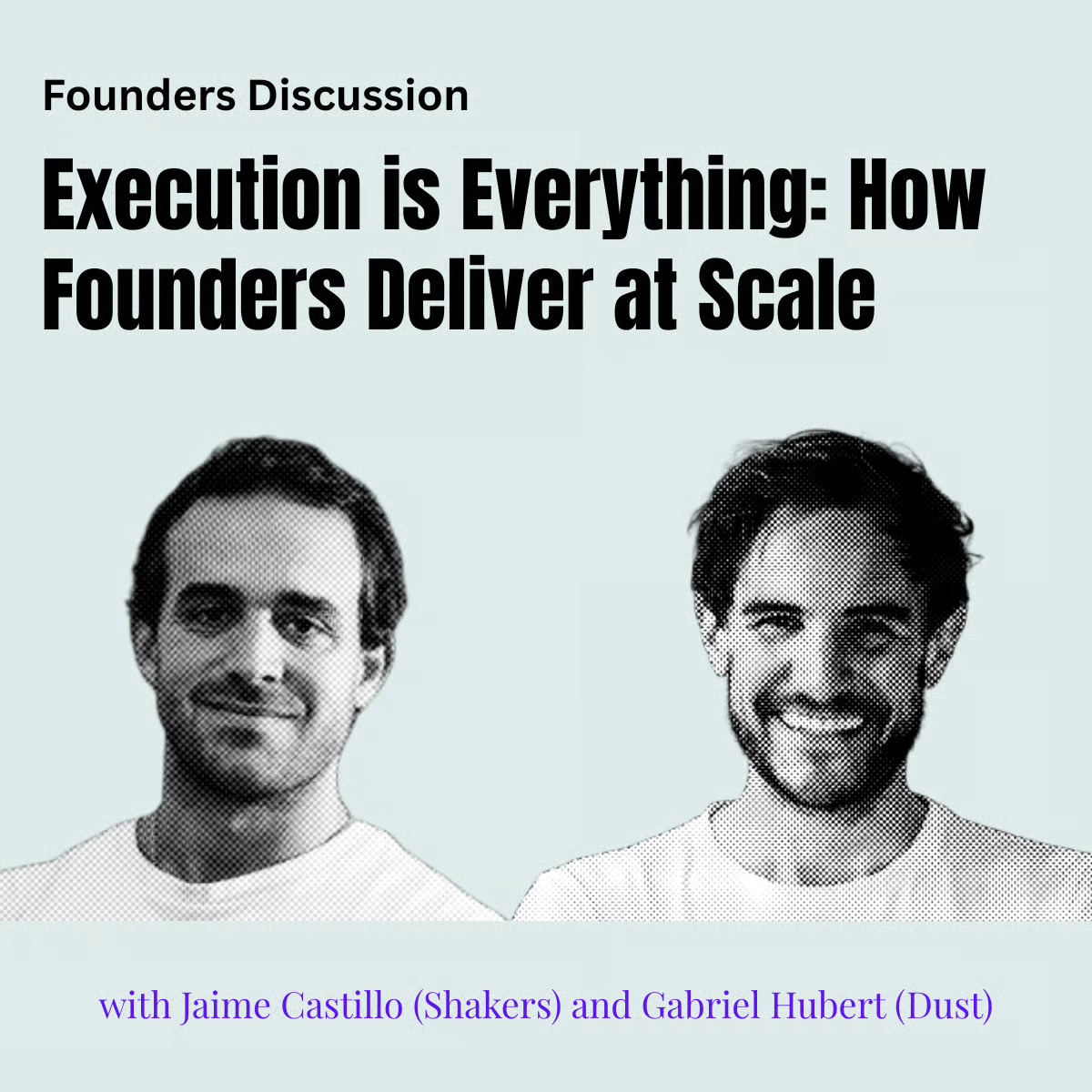
James recapped a conversation between our own Gabriel and Jaime from Shakers while at Viva Tech (here). Many insights for early builders inside.
“Whenever you sit down at a desk you’re either getting 5 years experience in 2 years or 2 years of experience in 5 years, but never 2 years of experience in 2 years. You need to decide which of those experiences are right for you.” — Gabriel
On that note, we’re hiring in every team!
Use case of the week
Since Sarah mentioned her Sylvie, let’s stay in customer support for a bit. Here below is 1 minute with Abboud where he shows us how to convert resolved tickets into searchable articles and FAQs, capturing best practices for future use.
Meet us IRL
Seb and I will be at the GenAI meetup in Paris this Tuesday -June 24- digging into MCP at Dust. More info here.
Stan will lead a discussion group at the Cerebral Valley AI Summit in London on June 25. Here’s the agenda.
That same day -June 25- we co-host our very first AI Design Night. Join here.
Our next session for Builders is happening next week online -June 26- the theme being: ‘Supercharge your Sales: a deep dive into MCP tools in Dust – Gmail, GCalendar, Notion & more’ — register here.
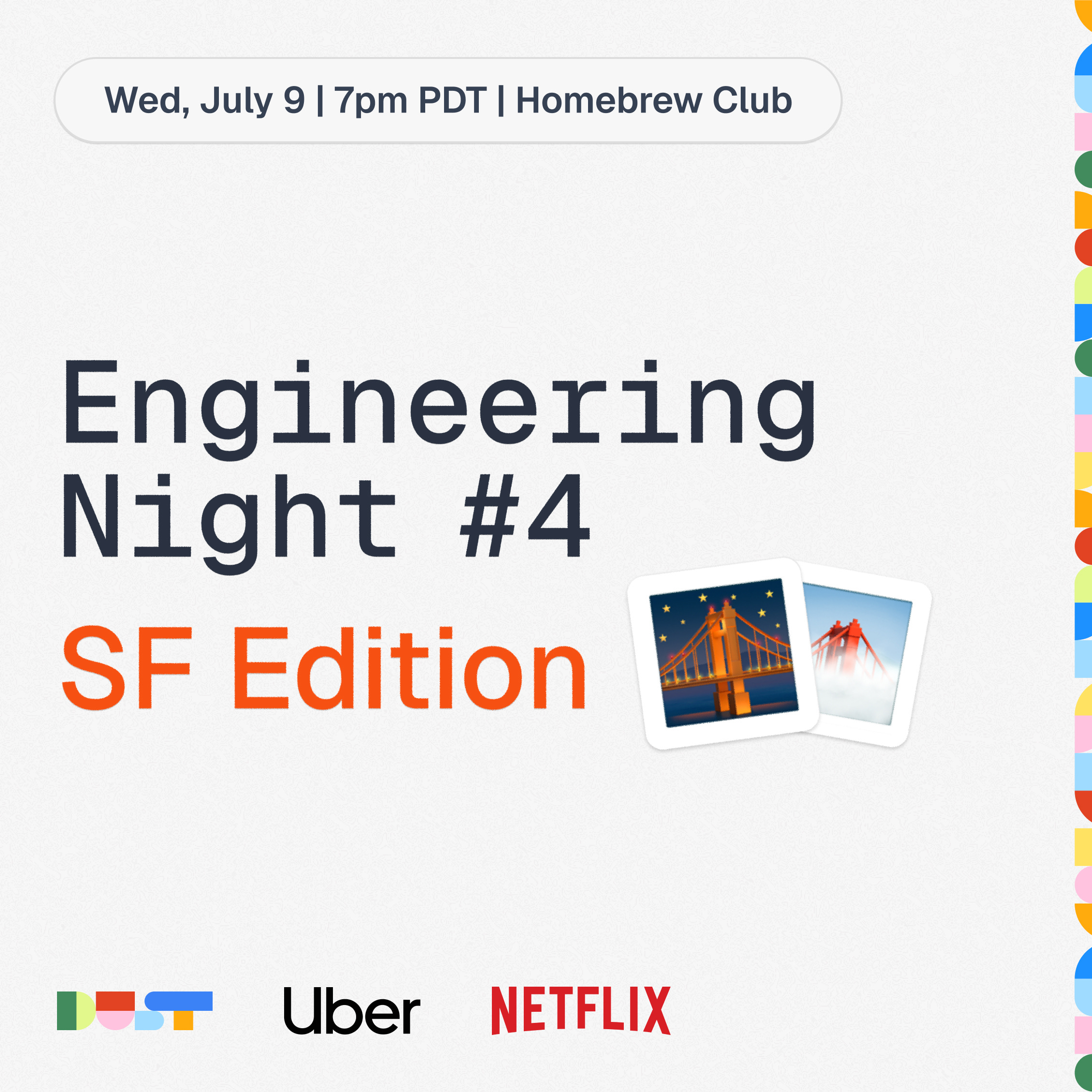
Engineering Nights are coming to San Francisco 🌁 First edition on July 9 in Homebrew Club.
French Touch 🇫🇷
We have offices in San Francisco and Paris (and we’re hiring like crazy in both spots), so we do have people within the team and customers who speak ‘the language of Molière’ (as we say in French!).
Nice one!